Get a free AI visibility report

Marketing agencies need AI visibility tools that scale across multiple client accounts without multiplying costs or reporting overhead. This guide ranks the 10 best options for 2026, starting with the platforms built for agency-style, multi-client workflows.
Agencies managing AI visibility for multiple clients face a distinct problem: most GEO tools are priced and built for a single brand tracking its own footprint. Agencies need multi-client dashboards, white-label-friendly reporting, and pricing that does not punish them for adding seats or accounts as their client roster grows.
This matters more in 2026 than it did even a year ago. Buyers now research vendors inside ChatGPT and Google AI Overviews before they ever open a traditional search engine, and clients are starting to ask their agencies directly why a competitor shows up in an AI answer and they do not. Agencies that can answer that question, and back it up with tracked data, are the ones retaining accounts. The 10 tools below are evaluated specifically on how well they support agency-style, cross-client work.
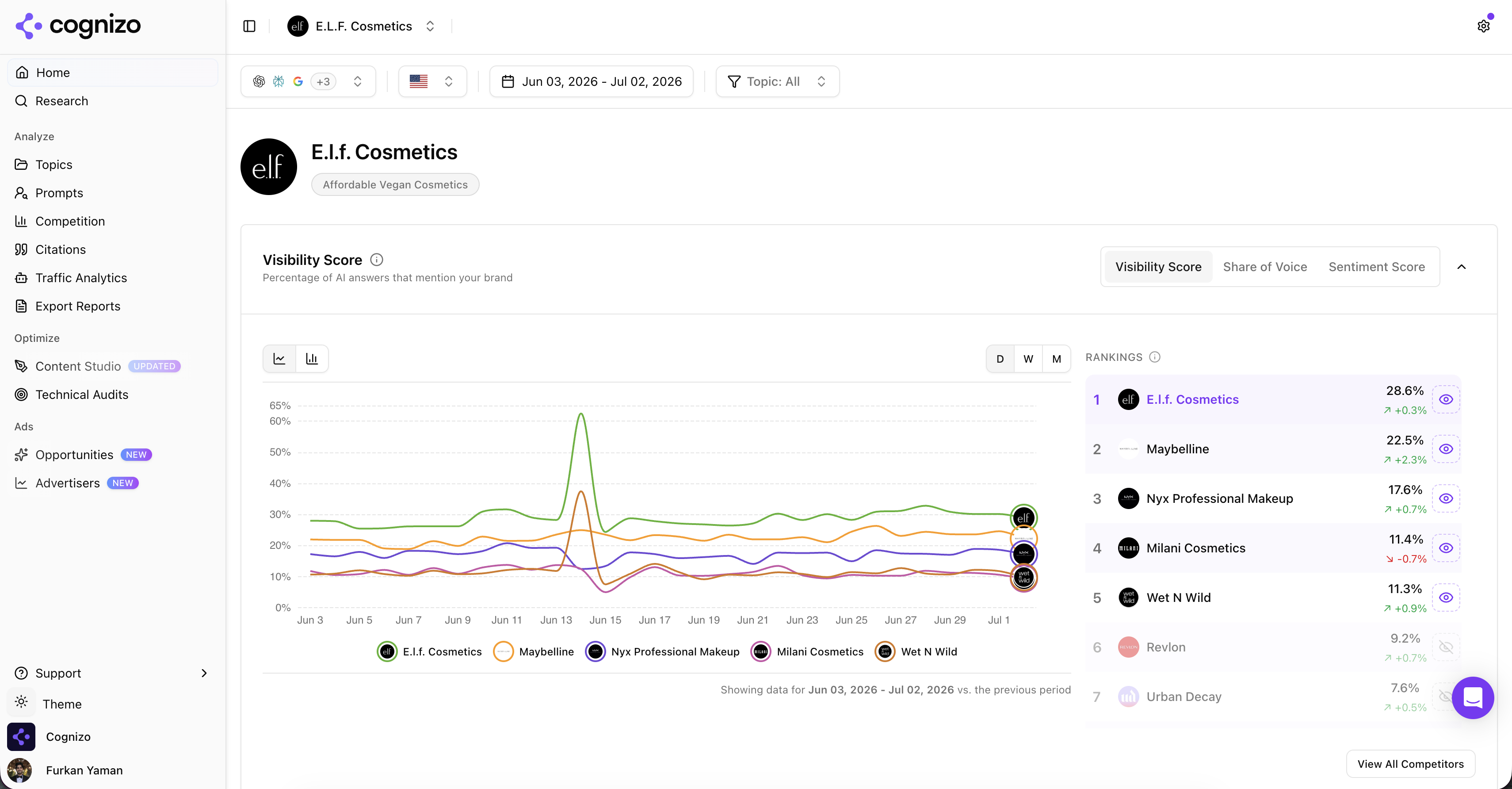
Cognizo combines organic AI visibility tracking with ChatGPT paid advertising in a single platform, which lets agencies manage both the earned and paid sides of AI search from one dashboard instead of stitching together separate tools for each client engagement.
Every Cognizo plan, including the $149/mo Core tier, includes unlimited seats, unlimited regions, and unlimited languages. For an agency running the same account across a growing internal team, or managing clients across multiple countries and languages, this removes a cost structure that penalizes growth.
Pitch Brands lets an agency show a prospect how their brand actually shows up in ChatGPT, Google AI Overviews, and other AI platforms, before the prospect becomes a client. The agency runs a short audit on that brand, uses the results in the pitch, and if the deal closes, keeps using the same setup for ongoing tracking instead of starting over.
Cognizo also runs an Agency Partner program alongside Pitch Brands. Partners get listed in Cognizo's Agency Directory for inbound lead flow, access to bulk pricing and consolidated billing across client accounts, and support from Cognizo on go-to-market and AEO strategy education. Some of Cognizo's earliest agency partners started with a single client and used Pitch Brands to scale AEO across their entire portfolio.
Cognizo also offers dedicated agency pricing, separate from the brand tiers above. Agency pricing includes bulk pricing and consolidated billing across client accounts, so agencies pay one bill for their whole portfolio instead of managing separate subscriptions per client.
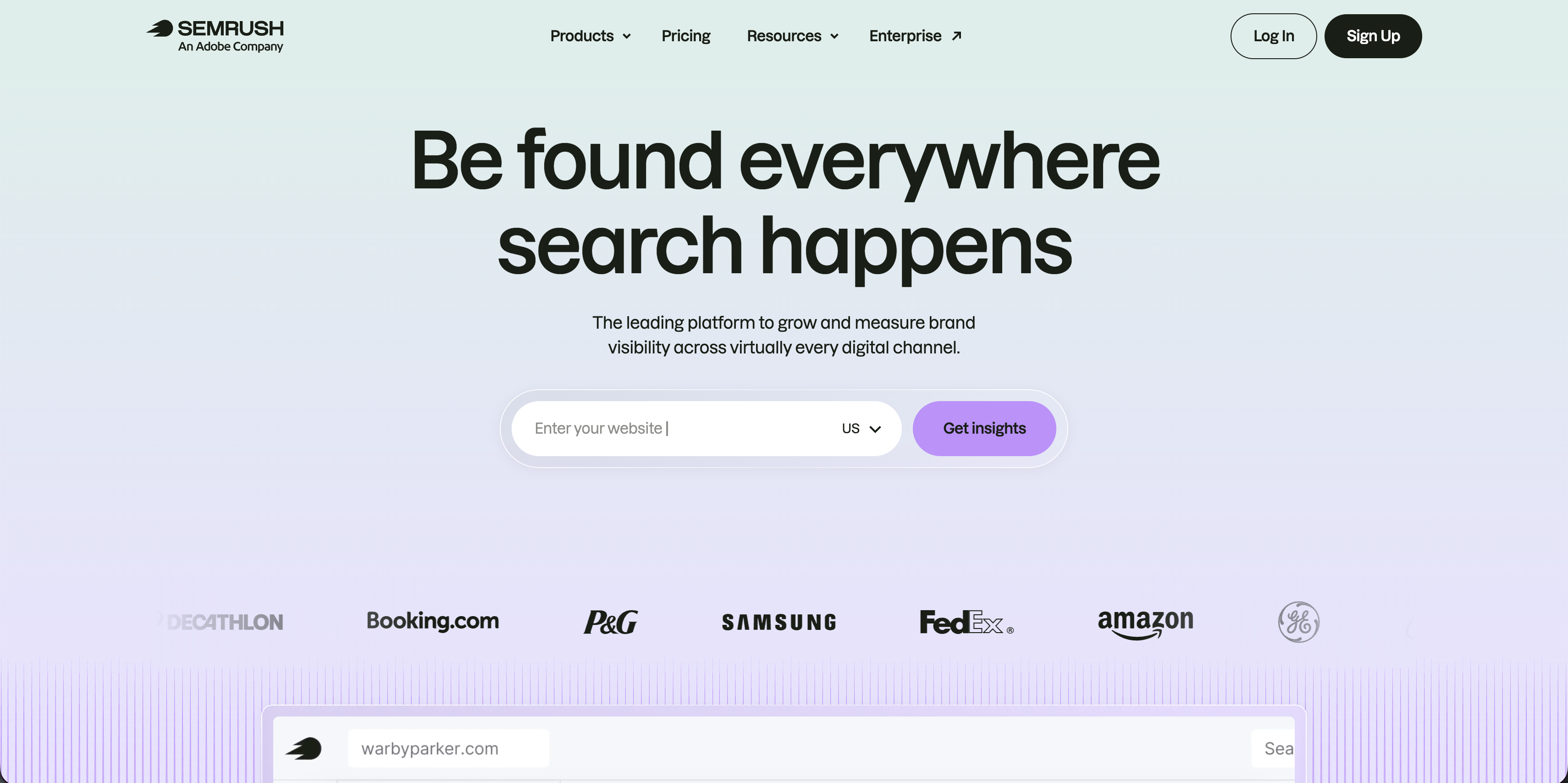
Semrush AI Visibility tracks brand mentions across 4 to 6 AI engines, starting at $99/mo per domain. Because pricing is per domain, agencies managing several client accounts should calculate total cost across all domains before comparing it to flat-rate platforms.
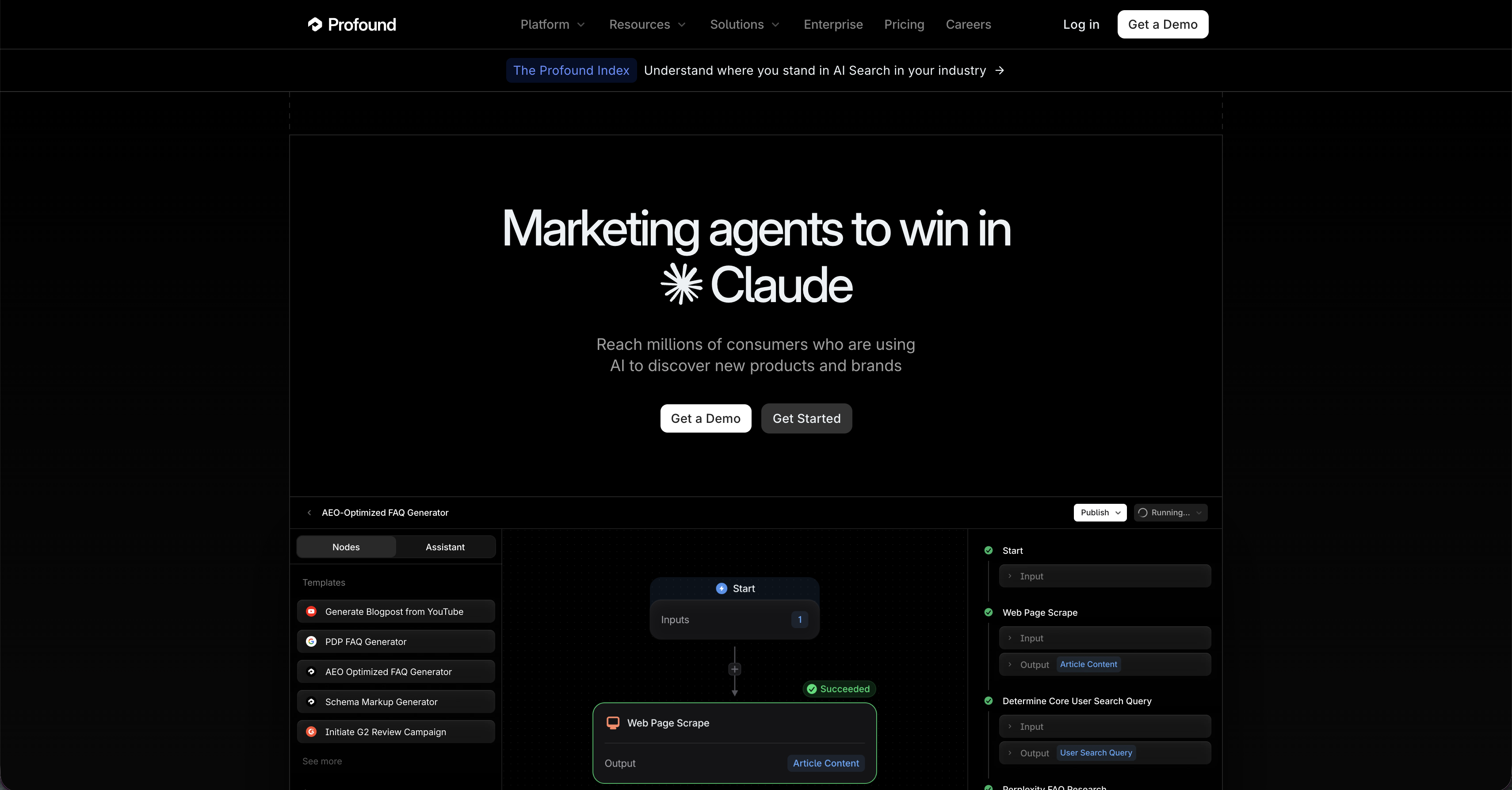
Profound tracks crawler analytics, including GPTBot and ClaudeBot activity, alongside citation tracking across 1 to 10 engines depending on plan tier, starting at $99/mo. It offers dashboards oriented around enterprise reporting structures.
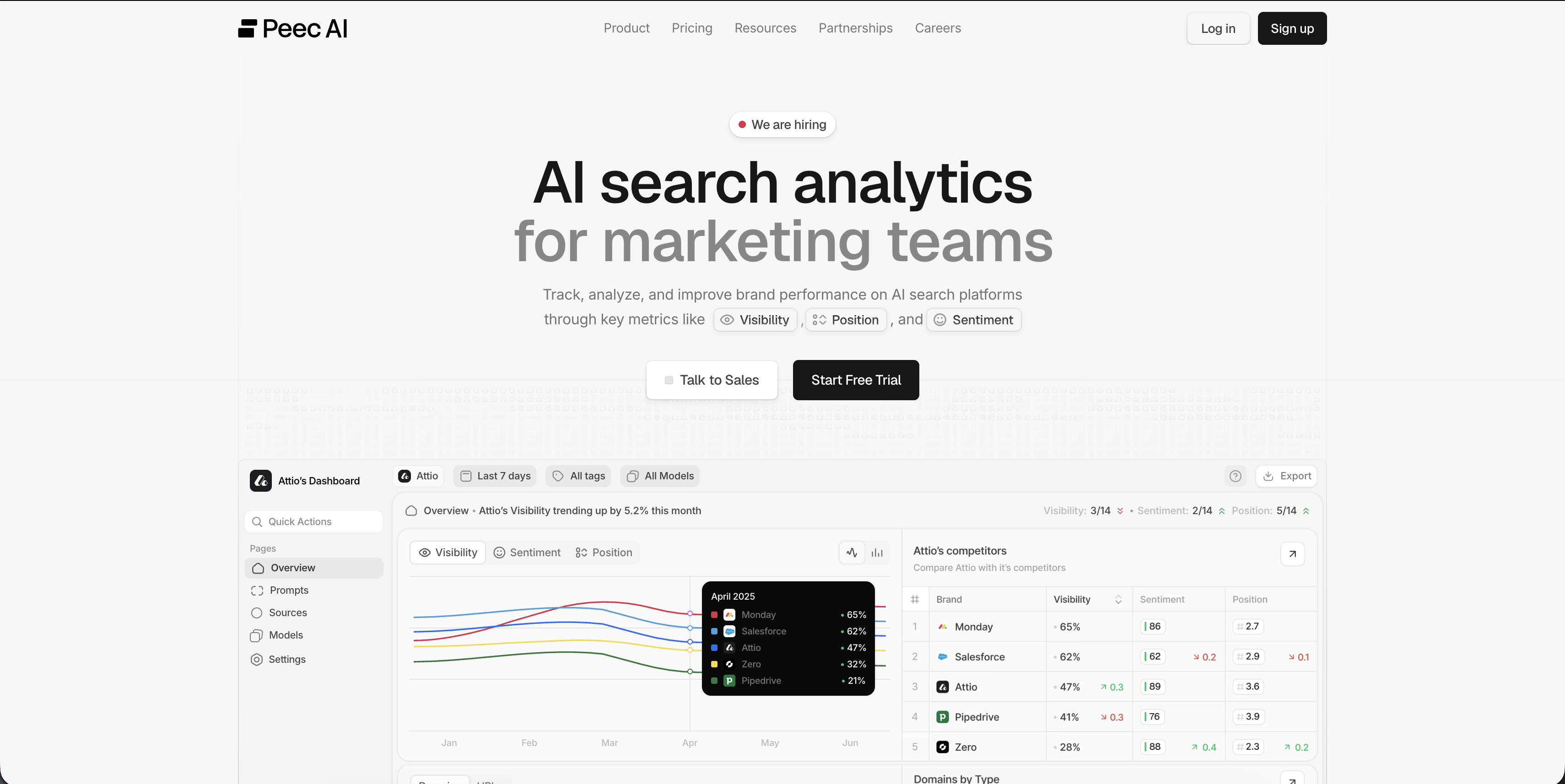
Peec AI includes unlimited users on its plans, starting at €85/mo, and covers 3 to 7-plus AI engines depending on tier. The unlimited-seat structure is relevant for agencies adding client-facing team members without additional licensing costs.
AthenaHQ offers a free Essential tier and a paid Starter tier at $295/mo, covering 5 to 9-plus engines. The free tier allows agencies to test the platform's tracking approach on a single account before committing budget across a client roster.
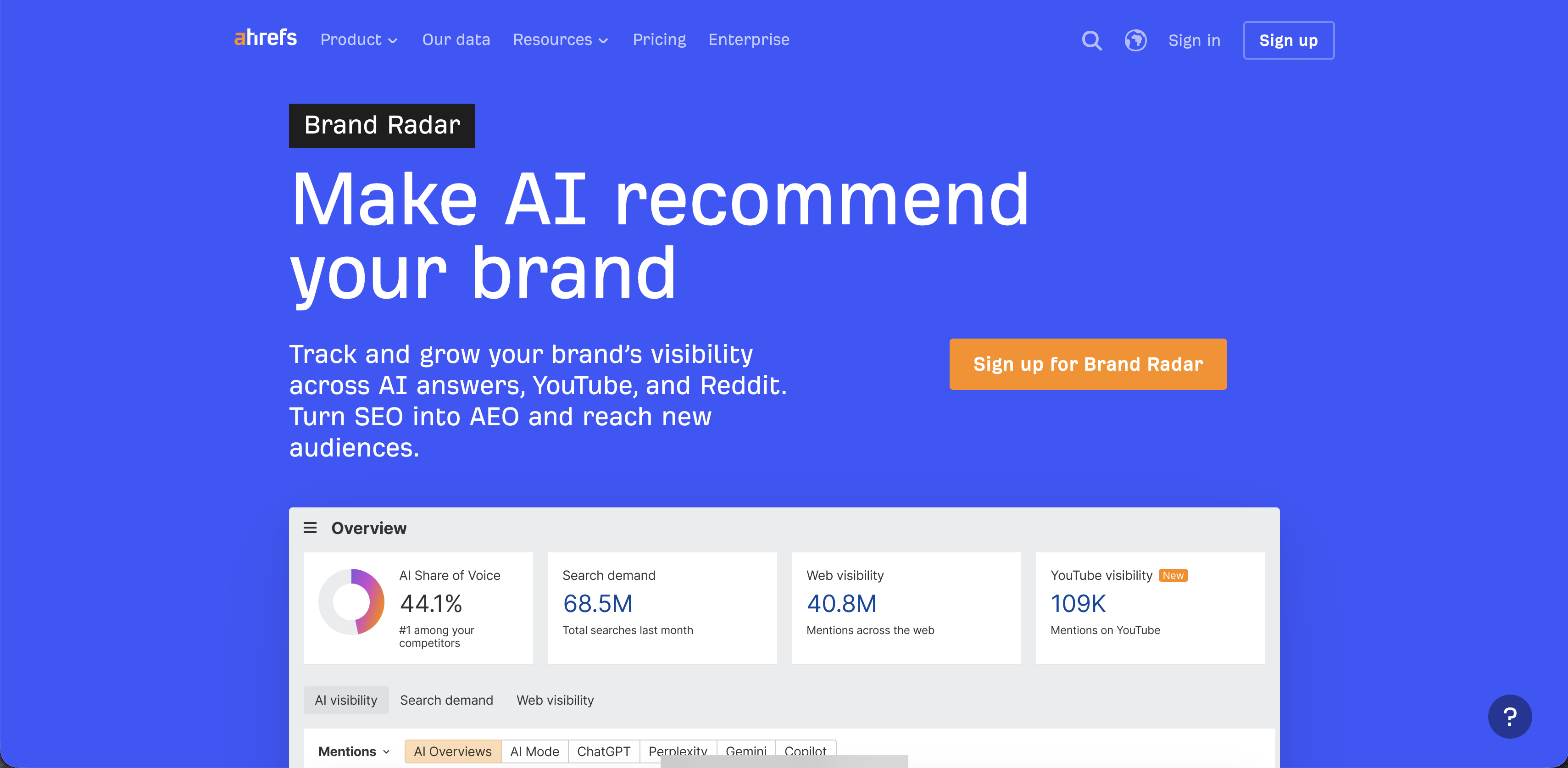
Ahrefs Brand Radar tracks visibility across 6 AI engines, with pricing at $199/mo per platform tracked. This per-platform pricing model means costs scale directly with how many AI engines an agency needs to monitor for each client.
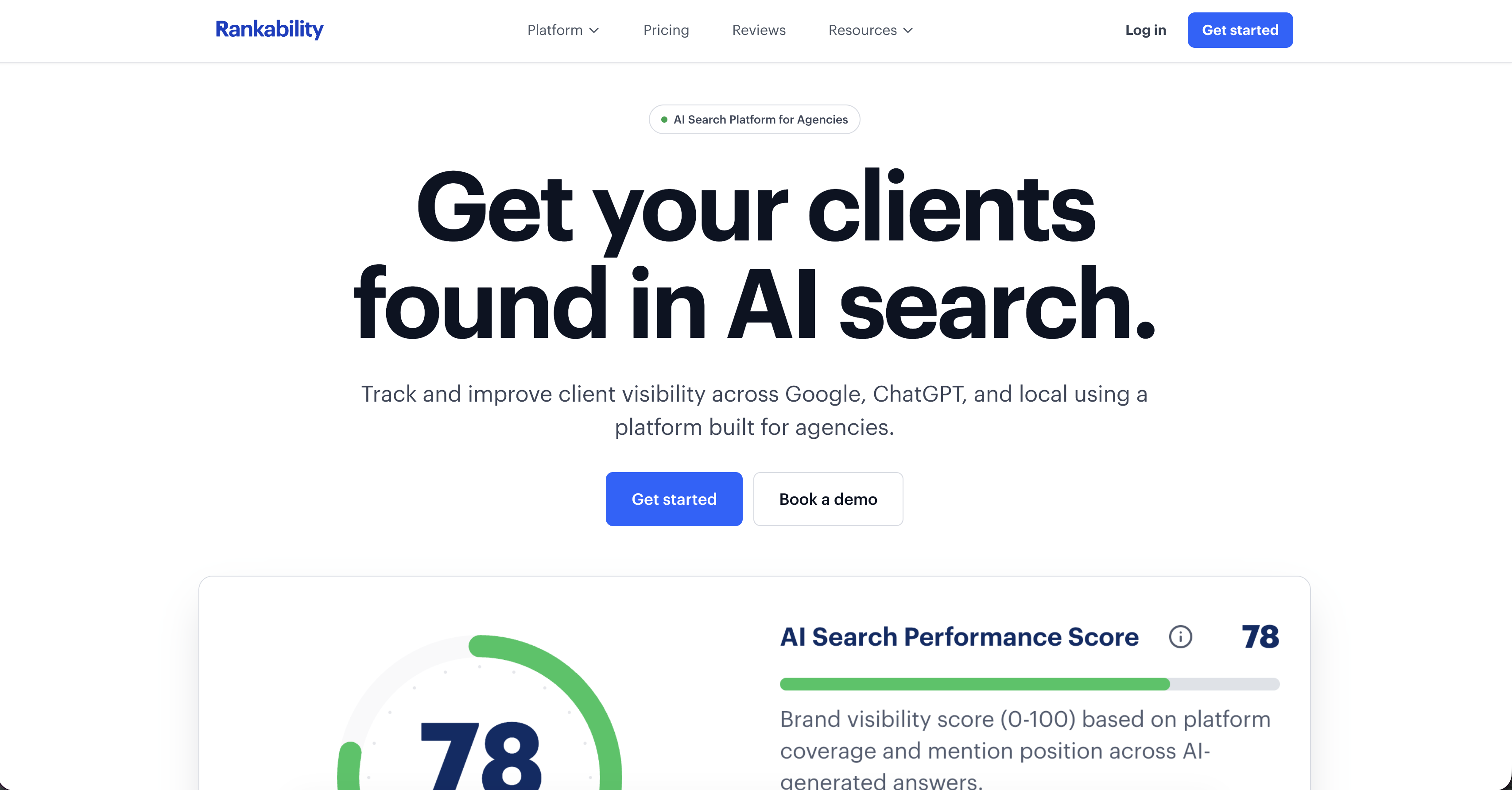
Rankability covers 7 AI engines starting at $79/mo, positioning it among the lower-cost entry points in this category for agencies working with smaller client budgets.
Surfer's Standard plan starts at $99/mo and covers 1 to 5 AI engines, with content optimization features that originated in traditional SEO before extending into AI visibility tracking.
SE Ranking offers an AI Search add-on covering 4 engines, priced at $103.20/mo on an annual plan. It sits alongside SE Ranking's existing traditional SEO rank tracking suite.
HubSpot AEO tracks 3 AI engines starting at $50/mo, integrated within the broader HubSpot marketing platform. Agencies already managing client HubSpot instances may find this relevant to their existing tool stack.
Agencies reporting on AI visibility should follow the same two-stage funnel used in traditional SEO measurement. Stage 1 covers mentions and citations, the AI search equivalent of impressions, where Visibility Score is the core KPI clients should see first. Stage 2 covers AI-referred traffic, meaning UTM-tracked visits arriving from AI platforms, the equivalent of clicks. Stage 3 covers revenue attribution, meaning GA4-tracked conversions from AI-referred sessions, the equivalent of the final sale in a traditional funnel.
Stage 2 numbers will always look smaller than Stage 1, because most AI answers do not include a clickable link back to the source. This is not a sign that the channel underperforms, it is a structural feature of how answer engines work. UTM tracking also has a blind spot: a buyer who sees a brand mentioned in ChatGPT and later searches the brand name directly on Google will not show up as an AI referral, even though the AI mention influenced their decision. Agencies can partially close this gap by adding a "How did you hear about us" field with an explicit AI option to client demo request forms and signup flows.
Hat Club, a Cognizo customer, saw roughly 1 in 50 site visitors arrive from AI referral traffic, a modest share by traditional click-volume standards at Stage 2. That same traffic segment drove 20x revenue growth in AI-influenced sales at Stage 3, tracked through GA4-attributed conversions from AI-referred sessions. Agencies citing this case study to clients should frame it as the clearest evidence that revenue attribution, not click volume, is the stage that proves AI search ROI.
Beyond the metrics themselves, agencies should diagnose visibility gaps using a two-gate framework. Gate 1 is technical access: whether AI crawlers like GPTBot and ClaudeBot can actually reach and index a client's pages, which depends on robots.txt configuration, llms.txt setup, crawl budget, and schema markup. Gate 2 is content and reputation quality: whether crawlers are visiting but not citing, which comes down to answer-first content formatting and what third-party sources like G2 reviews and comparison articles say about the brand. A client missing from AI answers could be failing either gate, and the fix differs depending on which one it is.
Agencies still explaining this shift to clients anchored on Google rank tracking can point them to a broader breakdown of what AI SEO actually means and how it differs from traditional optimization. For agencies comparing the wider category before narrowing to agency-specific picks, a full rundown of AI search optimization tools is a useful companion to this list.
Most platforms support multi-client tracking under one account, but the practical limit is usually the number of prompts, platforms, or domains included in a given pricing tier rather than the number of logins. Agencies should confirm whether adding a new client requires a new subscription tier or simply consumes more of an existing prompt allowance, since this affects total cost as the client roster grows.
Agencies typically either bundle AI visibility reporting into an existing SEO retainer or price it as a standalone add-on based on the number of prompts and platforms tracked per client. The right approach depends on how much manual analysis and content recommendation work sits on top of the raw tracking data, since that labor, not just the software cost, drives most of the margin.
This usually traces back to third-party content, such as negative reviews, critical comparison articles, or Reddit threads, that AI models are pulling from. Fixing it typically requires a PR and reputation strategy alongside content optimization, since sentiment reflects what already exists across the web rather than something a single owned page can override quickly.
Coverage for location-specific prompts varies by platform, and agencies managing multi-location clients should check whether a tool supports region-level prompt tracking rather than only a single national view. Tools with unlimited regions on their base plan remove a cost barrier for agencies testing location-specific visibility across several client markets.
Most platforms update tracked prompts on a rolling basis, but agencies should align reporting cadence with client expectations rather than data refresh frequency alone. A monthly or quarterly reporting cycle is common, though agencies running active AEO content campaigns may want to check Visibility Score trends more frequently to catch early signals from new content.
Yes, competitive benchmarking is a standard feature across most of these platforms, and it does not require the competitor to have their own account. This is useful for agency pitches, since showing a prospective client their current Visibility Score against named competitors is often more persuasive than a generic capabilities overview.
Free tiers typically cap the number of tracked prompts, platforms, or historical data available, which limits how defensible the reporting is over time. Agencies presenting data to clients on a recurring basis usually need enough prompt volume and historical tracking to show trends, not just a single snapshot, which free tiers are rarely built to support.
.svg)

.svg)


